
Wheat Ridge is a compact city of approximately 32,000 residents in Jefferson County, immediately west of Denver. Known historically as the "Carnation City" for its agricultural roots, Wheat Ridge today contains roughly 15,000 housing units. About 80 percent of homes were built between 1940 and 1979. This older housing stock, combined with some of the strictest roofing codes in the Denver metro, creates a unique repair environment. When damage appears on your Wheat Ridge roof, understanding the city's specific requirements saves time, money, and headaches.
Need roof repair in Wheat Ridge, CO?
Call Mighty Dog Roofing of Downtown Denver at (720) 702-1572 for a free inspection.
You also reach us online at mightydogroofing.com
Why Wheat Ridge Roofs Need Repair More Often Than You Expect
Wheat Ridge sits at approximately 5,400 feet elevation in Jefferson County, bordered by Arvada to the north, Denver and Edgewater to the east, Lakewood to the south, and Applewood to the southwest. Jefferson County ranks among Colorado's most hail-impacted counties. The May 2017 supercell tracked directly through Wheat Ridge, dropping baseball-sized hail. City officials reported roughly half of all homeowners in Wheat Ridge suffered roof damage from that single storm. The storm caused over $2.3 billion in metro-wide insured losses.
Colorado saw record-breaking hail in 2023, with nearly 800 reports of hail over one inch. Reports of baseball-sized hail surged nearly threefold since 2019 according to the National Weather Service in Boulder. The May 2024 hailstorm caused an additional $1.9 billion in metro-wide damage. Wheat Ridge sits in the path of storms forming over Evergreen and Golden that track east across the metro.
Beyond hail, Wheat Ridge roofs face intense UV radiation at altitude (roughly 25 percent more intense than sea level), freeze-thaw cycles from October through April, and Chinook winds descending from the foothills. The city's predominantly mid-century housing stock amplifies the problem. Homes built in the 1950s, 1960s, and 1970s in Bel Aire, Applewood Villages, Barths, Kipling, and Hilltop Estates were constructed with standard materials and ventilation systems well below current performance standards.
Common Roof Repair Problems in Wheat Ridge Homes
Hail Damage on Wheat Ridge's Mid-Century Housing Stock
Hail dislodges protective granules, fractures the fiberglass mat, and creates soft spots that develop into leaks weeks or months later. At Colorado's altitude, thinner air allows hailstones to maintain higher velocity, increasing impact force. Hail resistance is tested against UL 2218 standards, which rate shingles on a Class 1 through 4 scale.
Every Wheat Ridge neighborhood takes damage during Front Range storms. The 1950s ranches in Bel Aire and Barths, the 1960s homes in Stevens and Fruitdale, the 1970s builds in Kipling Villas and Panorama Park, and the newer construction near Anderson Park all face the same hail exposure. West-facing and south-facing slopes sustain the worst damage because storms approach from these directions.
Flashing Failures on Wheat Ridge's Older Homes
Flashing seals joints where your roof meets chimneys, vent pipes, skylights, and walls. Daily temperature swings at 5,400 feet expand and contract flashing metal continuously. Many Wheat Ridge homes have original or aging flashing around chimneys and vents. On homes from the 1950s and 1960s, flashing that has been patched multiple times over 60 or 70 years needs replacement, not another patch. Our free roof inspection identifies flashing problems before they cause interior water damage.
Ice Dam Damage on Low-Pitch Ranch Roofs
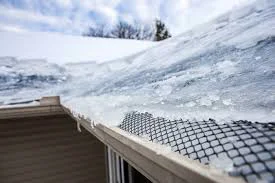
When attic heat melts snow on the upper roof, meltwater flows to cold eaves and refreezes into a dam. Water pools behind the dam and seeps under shingles. Wheat Ridge's predominantly ranch-style homes with 4:12 or lower pitches hold snow longer than steeper roofs. Homes in Bel Aire, Applewood Villages, and Barths are at highest risk due to lower pitches, minimal insulation, and older ventilation. The U.S. Department of Energy recommends R-49 insulation and proper ventilation to prevent ice dam formation.
Deck Deterioration and the Half-Inch Gap Rule
Many Wheat Ridge homes from the 1950s and 1960s were built with plank sheathing rather than plywood or OSB. Wheat Ridge code specifies that any gap exceeding half an inch anywhere in the sheathing requires a minimum 3/8-inch OSB overlay before new roofing is installed. During a repair, if damaged shingles are removed and the underlying plank deck shows gaps beyond half an inch, the repair scope expands to include an overlay. Products certified by the Cool Roof Rating Council perform best on properly supported decks.
Spotted damage on your Wheat Ridge roof? Do not wait.
Call (720) 702-1572 or visit our Wheat Ridge service page to schedule your free roof inspection.
We also respond to email and online contact forms on our website.
Wheat Ridge Building Codes: The Strictest Roofing Standards in the Metro
The City of Wheat Ridge Building Division at 7500 W 29th Avenue enforces roofing codes stricter than most neighboring cities. Contact them at 303-235-2855. As of January 2026, all new permit applications must follow the 2024 International Codes. Permits are filed through the OpenGov permit portal (launched January 2025).
How Wheat Ridge Roofing Codes Compare to Neighbors
| Requirement | Wheat Ridge | Arvada | Lakewood | Denver |
|---|---|---|---|---|
| Nails per shingle | 6 (strictest) | 4 | 4 | 4 |
| Max layers | 1 (full tear-off required) | 2 (overlay allowed) | 1 | 2 |
| Mid-roof inspection | Yes (required since 2014) | No | No | No |
| Ice and water shield | 2 ft past exterior wall | Code minimum | Code minimum | Code minimum |
| Drip edge | Required at eaves | Code minimum | Code minimum | Required |
| Gap rule | 1/2" gap = OSB overlay | None specified | None specified | None specified |
Wheat Ridge's 6-nail requirement means more fasteners per shingle than any neighboring jurisdiction. The mid-roof inspection, required since December 2014, means the inspector checks underlayment, ice and water shield, flashing, and the fastener pattern before remaining shingles are installed. A final inspection is also required. Mighty Dog Roofing of Downtown Denver manages both inspections on every Wheat Ridge project.
What to Expect During a Roof Repair in Wheat Ridge
Step 1: Free Inspection and Documentation
We start with a comprehensive roof inspection. We examine the roof surface, flashing, gutters, vents, and attic. We photograph all findings and provide a written report. This documentation supports insurance claims and establishes the scope of needed work.
Step 2: Estimate with Wheat Ridge Code Details
After the inspection, we provide a detailed estimate listing every repair item and the materials specified. We note the 6-nail pattern, ice and water shield placement, and any deck overlay requirements. For an overview of our services, visit our residential roofing page.
Step 3: Permit, Mid-Roof Inspection, and Repair
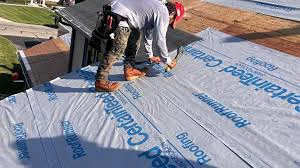
We file the permit through OpenGov. Our crew strips the damaged area to the deck, assesses for gaps (the half-inch rule), installs underlayment and ice shield per code, and applies shingles with the 6-nail pattern. We schedule the mid-roof inspection between the underlayment phase and final shingle installation. After completion, we schedule the final inspection. You receive all documentation.
Insurance Claims for Roof Repair in Wheat Ridge
The Colorado Division of Insurance provides resources for homeowners filing weather-related claims. Mighty Dog Roofing of Downtown Denver provides professional damage documentation, meets adjusters on site, and advocates for complete coverage. On Wheat Ridge homes, claims must account for the additional labor of 6-nail installation and the mid-roof inspection requirement. Many Colorado policies use percentage-based deductibles for wind and hail. Review your policy before storm season.
Choosing a Contractor in Wheat Ridge
Wheat Ridge requires contractors to hold a city license and pass the appropriate ICC examination. The city reciprocates with Denver, Aurora, Colorado Springs, Fort Collins, and Boulder. After hail events, out-of-state contractors flood Wheat Ridge neighborhoods. Many use 4-nail patterns (meeting neighboring city codes but failing Wheat Ridge's 6-nail requirement), skip the mid-roof inspection, and leave before problems surface. If your contractor is not pulling a Wheat Ridge permit and scheduling both inspections, they are violating city code.
Mighty Dog Roofing of Downtown Denver is licensed, insured, and local. We also handle gutter repair and installation.
Seasonal Maintenance for Wheat Ridge Roofs
Spring (March through April)
Schedule a professional pre-season inspection before hail season peaks. Document your roof's condition with photographs. Clean gutters. Homes near Clear Creek Trail and in the Fruitdale area accumulate early spring debris fast.
Summer (May through September)
After every storm, walk your property and photograph ground-level indicators. Check attic temperature on a hot day. The EPA ENERGY STAR program recommends R-49 for Wheat Ridge's Climate Zone 5.
Fall (October through November)
Clean gutters before winter. Trim branches within six feet of the roof. Check flashing sealant at all penetrations.
Winter (December through February)
Watch for icicles along eaves. On Wheat Ridge's low-pitch ranch homes, ice dams form fast. Contact a professional if water stains appear on ceilings after a thaw.
Wheat Ridge Neighborhoods We Serve
We provide roof repair across Wheat Ridge: Bel Aire, Applewood Villages, Barths, Kipling, Kipling Villas, Hilltop Estates, Stevens, Fruitdale, Panorama Park, Glencoe Hills, Anderson Park, and all surrounding areas. From the 1940s bungalows to newer builds, we know Wheat Ridge's strict codes and deliver work that passes both inspections.
Frequently Asked Questions: Roof Repair in Wheat Ridge, CO
How much does roof repair cost in Wheat Ridge?
Minor repairs cost $300 to $1,500. Larger repairs range from $1,500 to $5,000. Wheat Ridge's stricter codes (6 nails per shingle, mid-roof inspection, full tear-off) add labor compared to neighboring cities.
Why does Wheat Ridge require 6 nails per shingle?
The additional fasteners provide better wind resistance for Front Range Chinook events and improve hold on the older housing stock common throughout the city. This is stricter than the 4-nail standard in Arvada, Lakewood, and Denver.
Does Wheat Ridge require a mid-roof inspection?
Yes, since December 2014. The inspector checks underlayment, ice shield, flashing, and the 6-nail pattern before remaining shingles are installed. A final inspection is also required.
What is Wheat Ridge's tear-off rule?
One layer maximum. Any tear-off requires removal of all coverings to the deck. If gaps exceed half an inch, a 3/8-inch OSB overlay is required.
How do I know if my roof has hail damage?
Look for dented gutters, damaged AC units, and granules in downspouts. The 2017 supercell damaged roughly half of all Wheat Ridge homes. A professional inspection within 48 hours provides the best documentation.
Your Wheat Ridge roof protects everything inside your home. Keep it in top condition.
Call Mighty Dog Roofing of Downtown Denver at (720) 702-1572
Visit us at mightydogroofing.com
We are ready to help by phone, email, or through our online contact form.
Wheat Ridge has the strictest roofing codes in the metro for good reason: the city's older homes and Front Range exposure demand higher standards. Contact Mighty Dog Roofing of Downtown Denver today for your free inspection and protect your home before the next storm.