
How Attic Ventilation Works
The Intake and Exhaust Principle
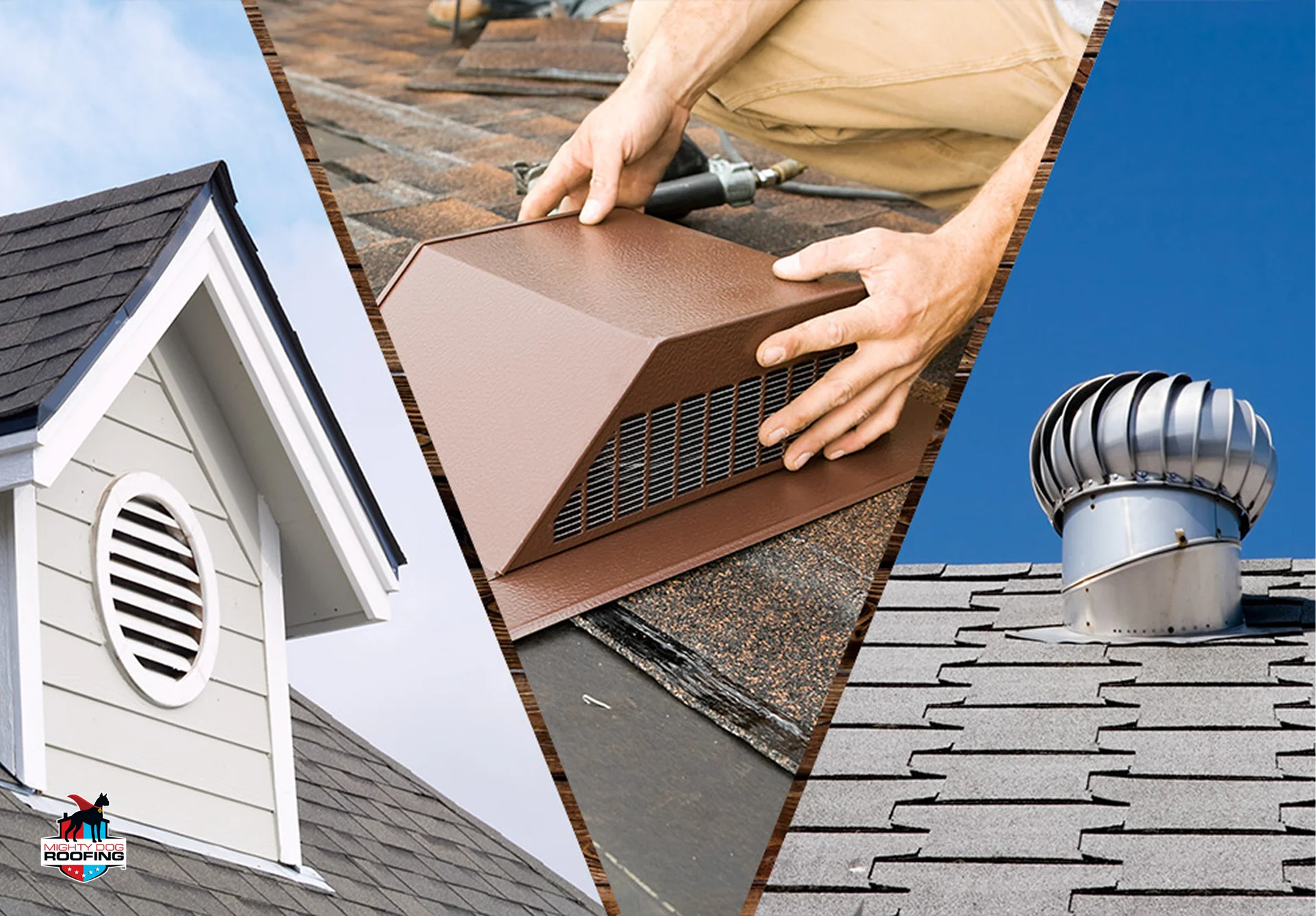
Effective attic ventilation requires two things working together: intake at the low point of the roof and exhaust at the high point. Intake typically comes from soffit vents — the perforated panels on the underside of the roof overhang. Exhaust comes from ridge vents, box vents, or powered attic ventilators at or near the peak. Warm air rises, cool air enters low, and the continuous exchange keeps the attic temperature closer to outside ambient rather than building to extreme heat.
What breaks this system is having exhaust without adequate intake, or intake without sufficient exhaust. An attic with ridge vents but blocked soffit vents draws replacement air from somewhere else — through gaps in the ceiling, through the living space below. This pulls conditioned air out of the house rather than drawing outside air through the vents. A proper ventilation system is balanced: equal or slightly greater intake than exhaust, so air moves through the attic the way it's supposed to.
The 1-to-150 Rule
Building codes and most shingle manufacturer specifications require a minimum of 1 square foot of net free ventilation area per 150 square feet of attic floor space, split evenly between intake and exhaust. For a typical Chester County home with 1,500 square feet of attic floor space, this requires 10 square feet of net free ventilation — 5 at intake, 5 at exhaust. Most homes built before 2000 in this area fall short of this standard — not dramatically, but enough to affect summer attic temperatures and long-term shingle performance. Mighty Dog Roofing of Greater Chadds Ford assesses ventilation balance on every roof inspection as a standard part of the process, not an optional add-on.
What Poor Ventilation Does to Your Roof and Energy Costs
Shingle Lifespan
Asphalt shingles deteriorate faster at high temperatures — the asphalt oxidizes, granules lose adhesion, and the shingle becomes brittle. A properly ventilated attic that keeps peak summer temperatures at 90–100°F will see measurably less shingle wear than an unventilated attic that reaches 140–150°F on the same hot days. For Pennsylvania homes using standard architectural asphalt shingles, the difference between adequate and poor ventilation can translate to 5–10 years of shingle lifespan. A roof that might last 28–30 years with correct ventilation may need replacement at 18–22 years if the attic has been running hot throughout its life.
Cooling Costs
When attic air is at 140°F and the living space below is at 72°F, heat moves through the ceiling assembly from the hot side to the cool side. Insulation slows this transfer but doesn't stop it. An HVAC system in a home with an overheated attic is fighting heat entering through the ceiling all day, on top of the normal thermal load from windows and walls. Research from Oak Ridge National Laboratory has measured cooling load reductions of 10–15% in homes where attic ventilation was corrected to meet the 1:150 standard — typically translating to $100–$300 per summer season in Chester County, depending on insulation levels and HVAC efficiency.
Winter Moisture Damage
Poor attic ventilation isn't only a summer problem. In winter, warm moist air from the living space rises into the attic through light fixtures, ceiling penetrations, and air barrier gaps. In an under-ventilated attic, this moisture condenses on cold sheathing. Over one or two heating seasons, condensation saturates the sheathing — initiating mold growth and rot that's invisible until a roof replacement reveals black or soft decking. Addressing ventilation before summer also prevents winter moisture problems: the same intake-exhaust balance that moves hot air out in summer moves moist air out in winter.
Exhaust Ventilation Options Compared
Vent Type | How It Works | Best For | Key Limitation |
Ridge vent | Continuous passive exhaust along the full roof peak | Most residential roofs with a continuous ridge | Requires continuous ridge; not practical on complex hipped or mansard roofs |
Box vent / static vent | Individual passive exhaust units at specific roof points | Complex rooflines; retrofit when full replacement isn't planned | Placement and quantity matter; less effective than ridge vent at equal net free area |
Power attic ventilator | Thermostat-controlled fan exhausting air mechanically | Very large attics; complex rooflines with inadequate passive options | Adds electrical cost; can depressurize attic if intake is insufficient |
Solar-powered attic fan | Same as power ventilator, powered by roof-mounted panel | Where electrical runs to the attic aren't practical | Output limited by solar availability; same depressurization risk as electric fan |
What to Check Before Summer Arrives
Blocked Soffit Vents — The Most Common Problem
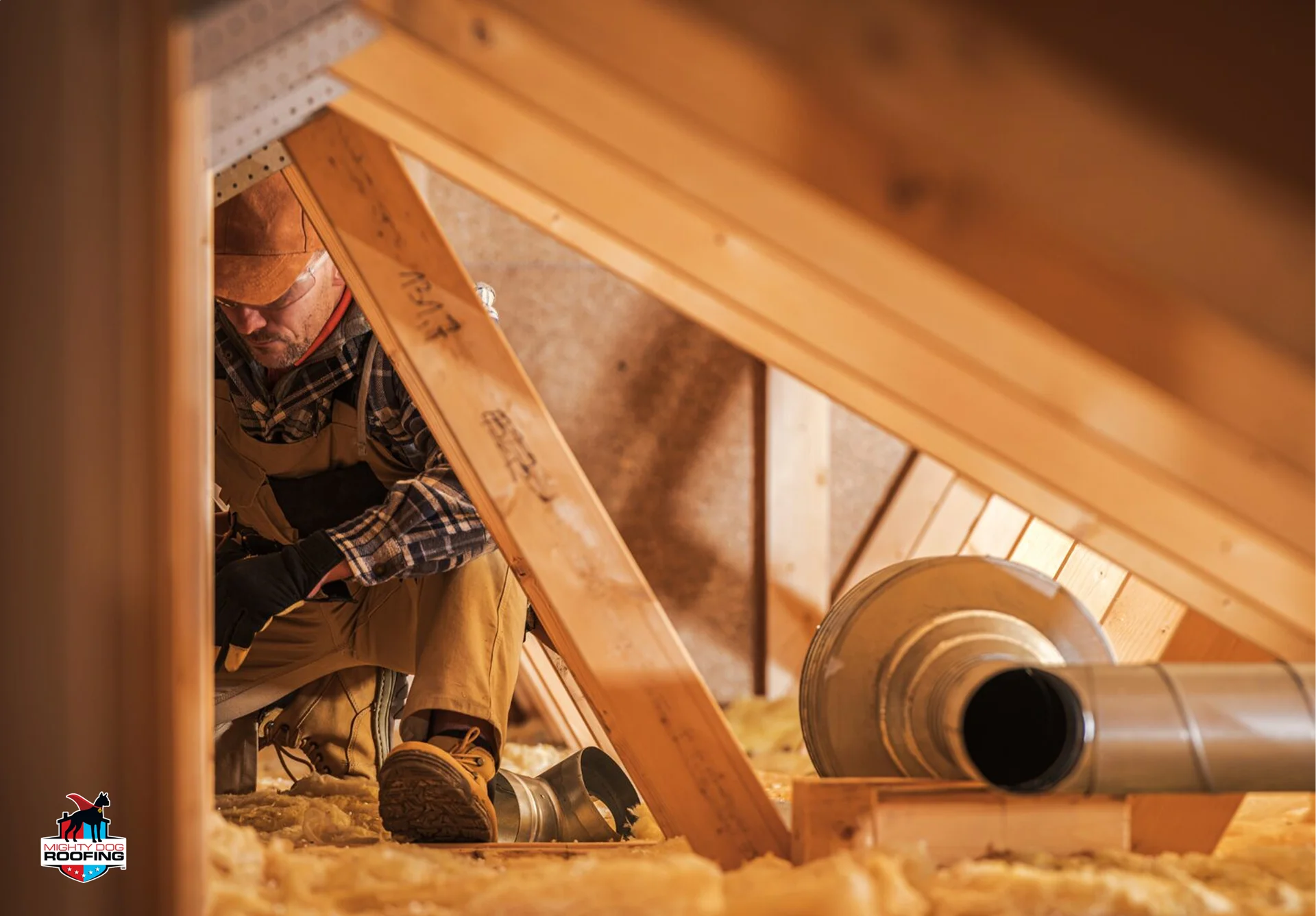
The most frequent attic ventilation failure in Chester County homes is intake blockage from insulation pushed over soffit vents from inside the attic. When blown-in fiberglass or cellulose reaches the eave area without foam baffles in place, it covers the vent openings. From outside, everything looks fine — from inside the attic, the air path is physically blocked. The fix is inexpensive and takes a few hours. If attic insulation has been added to your home without baffles confirmed in place at the eaves, checking this before summer is worth the time.
Signs You Can Identify Without a Professional
Several symptoms suggest ventilation problems worth investigating. Note any of the following before calling a roofing contractor near you — having specific observations will help them prioritize during the inspection:
- Ice dams in winter along the eaves — almost always related to uneven attic heat from poor ventilation or insulation gaps
- Unusually high cooling bills with no obvious explanation, particularly on the top floor
- A ceiling on the top floor that feels hot on warm days — heat radiating through from an overheated attic
- Peeling or dark-stained sheathing visible when you enter the attic — signs of previous or current moisture condensation
- Sheathing that feels distinctly hot to the touch on a warm day, beyond normal room temperature
- Daylight along the eaves that is blocked by insulation rather than coming through vent openings
Fix Attic Ventilation Before Summer: The Right Time Is Now
Ventilation corrections are far easier to make as part of a scheduled inspection or standalone project than as an emergency repair after heat or moisture damage has already occurred. The window between the end of winter and the start of hot weather is ideal — contractors are available, weather allows for any necessary roofwork, and corrections made now benefit the home through the entire summer season.
The certified roofing professionals at Mighty Dog Roofing of Greater Chadds Ford assess ventilation balance, soffit intake condition, exhaust system effectiveness, and shingle condition on every inspection — and provide a written report with findings and recommendations so you know exactly what the system needs before committing to any work.
Inspections cover homes throughout Chester County, including Kennett Square, Toughkenamon, Glen Mills, Media, Ashland, and surrounding areas. The written report breaks findings into priority levels — what needs attention now, what to monitor, and what's performing correctly — so you have a clear, actionable picture rather than a general assessment.
If you haven't had your attic ventilation evaluated recently, or if your home shows any of the signs above, schedule a free roof inspection with Mighty Dog Roofing of Greater Chadds Ford before the summer heat arrives.