
A new roof is an investment. But in 2026, there are ways Rhode Island homeowners may be able to lower the net cost of a roof project if they understand what qualifies and how to document it.
Important: This is general educational info, not tax advice. Programs and eligibility rules change, and your CPA or tax professional should confirm what applies to your situation.
The big rule: shingles usually do not qualify
In most cases, “roofing shingles” themselves do not qualify for rebates or tax credits.
Where homeowners often save money is in the system underneath and around the roof: - Attic insulation - Air sealing - Certain ventilation upgrades - Solar-related upgrades (product-dependent)
The key is planning the project so the eligible work is clearly separated and documented.
1) The Air Sealing and Insulation credit (25C)
Under the Energy Efficient Home Improvement Credit (often referred to as 25C), many homeowners can claim a percentage of eligible costs for insulation and air sealing, up to program limits.
The Mighty Dog strategy
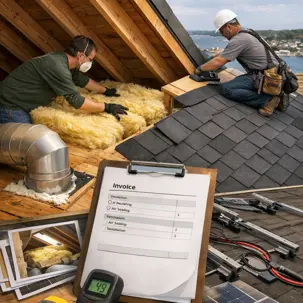
When we tear off your old roof, attic access is often easier and safer. That makes it a smart time to: - Seal common attic bypasses (top plates, chases, attic hatch, recessed lights) - Add insulation to improve comfort and reduce heat loss
We recommend billing insulation and air sealing as separate line items, so you have clean documentation for your tax professional.
Why this matters in Rhode Island
Many RI homes (especially older housing stock) are under-insulated. Improving attic insulation can: - Reduce ice dam risk - Reduce HVAC load - Improve comfort on the second floor
2) Ventilation upgrades and “Clean Heat” readiness
Ventilation is not just about shingles. A balanced attic (intake plus exhaust) helps control heat and moisture.
A properly designed ridge vent plus soffit intake can: - Reduce attic heat buildup in summer - Reduce condensation risk in winter - Help insulation perform the way it is supposed to
If you are upgrading to a heat pump through a Rhode Island program, attic insulation and ventilation can play a big role in real-world efficiency. Some rebate programs also require certain home performance steps to maximize results.
3) Solar-ready prep (future-proofing)
Even if you are not installing solar today, you can prepare your home so you do not have to disturb a newer roof later.
A “solar-ready” roof plan can include: - Verifying roof deck condition and structural integrity - Using long-life underlayment and proper flashing details - Planning penetrations and routing so future solar work is cleaner
This is not a direct roof rebate by itself, but it can prevent expensive rework and help you take advantage of future solar incentives.
What documentation should homeowners keep?
To make credits and rebates easier to claim, keep: - A detailed invoice with separate line items for eligible work - Product documentation (model numbers, efficiency statements if applicable) - Photos or inspection notes (helpful for your records) - Any program forms or confirmations
If you are planning a roof replacement in Rhode Island and want to reduce your out-of-pocket cost, ask us for a roof plan that includes ventilation and insulation options with clear, separate documentation.
Call (401) 425-4108 or use our Contact Us page to schedule an estimate.
Rhode Island Service Locations:
Ashaway, Barrington, Bradford, Bristol, Carolina, Central Falls, Charlestown, Chepachet, Clayville, Coventry, Cranston, Cumberland, East Greenwich, East Providence, Exeter, Forestdale, Foster, Glendale, Greene, Greenville, Harrisville,Hope,Hope Valley, Hopkinton, Jamestown, Johnston, Kenyon, Kingston, Lincoln, Little Compton, Manville, Mapleville, Middletown, Narragansett, Newport, North Kingstown, North Providence, North Scituate, North Smithfield, Oakland, Pascoag, Pawtucket, Portsmouth, Providence, Riverside, Rockville, Rumford, Saunderstown, Shannock, Scituate, Slatersville, Smithfield, Tiverton, Wakefield, Warren, Warwick, West Greenwich, West Kingston, West Warwick, Westerly, Wood River Junction, Woonsocket, Wyoming
FAQ
Can I get a tax credit for a new roof in 2026?
Standard shingles typically do not qualify. However, attic insulation, air sealing, and some eligible ventilation or solar-related upgrades may qualify under certain programs. Confirm eligibility with your tax professional.
What is the recommended attic insulation for Rhode Island?
Many Rhode Island homes target attic insulation levels around R-49 to R-60 depending on the home and current guidance. A professional evaluation can confirm what makes sense for your house.
Should I do insulation at the same time as a roof replacement?
Often, yes. It can be more efficient to address attic access, air sealing, and ventilation planning during the same project so the system works together.